
Convo South Africa Pauses Operations: A Wake-Up Call for Disability Rights and Funding Models in South Africa
By This email address is being protected from spambots. You need JavaScript enabled to view it. | General Manager of Convo South Africa.
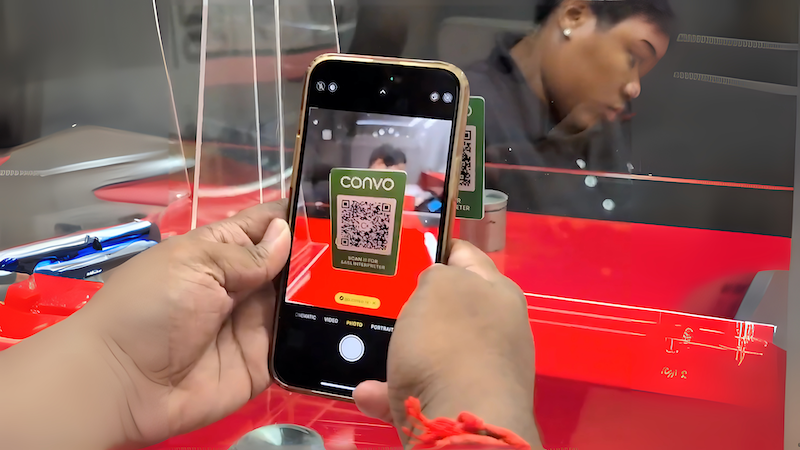
A vital link for 22,000 Deaf South Africans is about to break. Convo South Africa, the Deaf-owned and Deaf-led provider of Video Relay Services (VRS), announces a pause in its day-to-day operations effective 28 February 2026.
This decision is a direct challenge to the promises made in the 2026 State of the Nation Address (SONA). While President Ramaphosa committed to an inclusive digital economy where 'no one is left behind,' the impending blackout for 22,000 Deaf citizens on 28 February reveals a systemic failure to translate SONA rhetoric into legislative action regarding who pays for accessibility.
Since 2009, Convo Global has connected over 70 million Deaf individuals globally. In South Africa, Convo has handled over 22,000 conversations since 2022, facilitating everything from emergency ambulance calls to job interviews. Despite the clear demand, the current funding ecosystem in South Africa remains fragmented and unsustainable compared to international standards.
“In light of the 2026 SONA, we must ask why the government’s vision for digital transformation excludes the 1.5 million South Africans who use Sign Language.
The Tale of Two Systems: Why South Africa is Falling Behind
Chelsea Williamson, General Manager of Convo South Africa, highlights the stark contrast between South Africa and the other regions where Convo operates (US, UK, Canada, Australia).
“As the General Manager of Convo, I have the unique vantage point of seeing how access is handled globally versus locally,” says Williamson. “In the United Kingdom, for example, the Access to Work scheme provides a government grant to persons with disabilities (PWDs). A Deaf person can use that grant to pay for their own interpreters or communication support. The power is in their hands, and the funding is guaranteed by the state.”
“In light of the 2026 SONA, we must ask why the government’s vision for digital transformation excludes the 1.5 million South Africans who use Sign Language. We have world-class legislation on paper and a President who speaks of dignity, but the implementation is flawed. We operate in a grey area where corporates often believe PWDs should pay for their own access, or they view accessibility as a ‘charity’ item rather than a compliance requirement. Without a centralized funding mechanism, like the UK model, accessibility services cannot survive solely on private sector goodwill.”
The Policy Gap: Ambiguity in Oversight
South Africa’s Constitution and the Code for Persons with Disabilities mandate reasonable accommodation. However, there is a critical lack of oversight regarding financial liability.
Currently, the Independent Communications Authority of South Africa (ICASA) mandates accessibility but has not enforced a clear, centralized funding model. This policy gap directly contradicts the SONA 2026 mandate to 'lower the cost of living and increase digital access for the vulnerable.' Currently, the fragmented landscape forces Mobile Network Operators (MNOs) to implement their own inconsistent solutions, leaving Deaf users isolated while the government fails to enforce the very universal access it championed at SONA.
“We have seen that when accessibility is left to market forces without clear regulatory enforcement on who pays, the Deaf consumer suffers,” Williamson adds. “We need to move away from fragmented corporate contracts toward a universal service model, potentially funded by a nominal levy on all subscribers, ensuring access is a right, not a luxury.”
We are calling for an immediate legislative review to address:
- The "Disability Tax": Why South Africans with disabilities are still expected to pay for their own basic communication access.
- SONA Accountability: How the government plans to reach its 7% employment equity target for persons with disabilities if the very tools needed for work (VRS) are being shut down.
- The Funding Solution: Moving toward a universal service levy, similar to successful models in the UK and Australia.
A Call for Legislative Review
South Africa’s Constitution and the Code for Persons with Disabilities mandate reasonable accommodation. However, there is a critical lack of oversight regarding financial liability.
Convo South Africa calls on the Department of Communications and Digital Technologies to immediately operationalize the 'social compact' mentioned in the 2026 SONA. We urge a review of funding mechanisms for Video Relay Services to align with the President’s stated goals, moving from ambiguous voluntary compliance to an enforced, state-supported framework that treats communication as a human right, not a luxury. The goal must be to align South Africa with international best practices, moving from ambiguous voluntary compliance to enforced, state-supported funding frameworks like those successfully implemented in the UK and Australia.
Convo’s leadership continues to seek long-term partners and funding solutions to potentially resume services in the future.
Related articles
Please pay it forward!

Philanthropic investments in education are among our most urgent priorities

People with nothing, have nothing to lose
